AI Identification
Aedes
100%
AED
✓ Verified
ai_vision
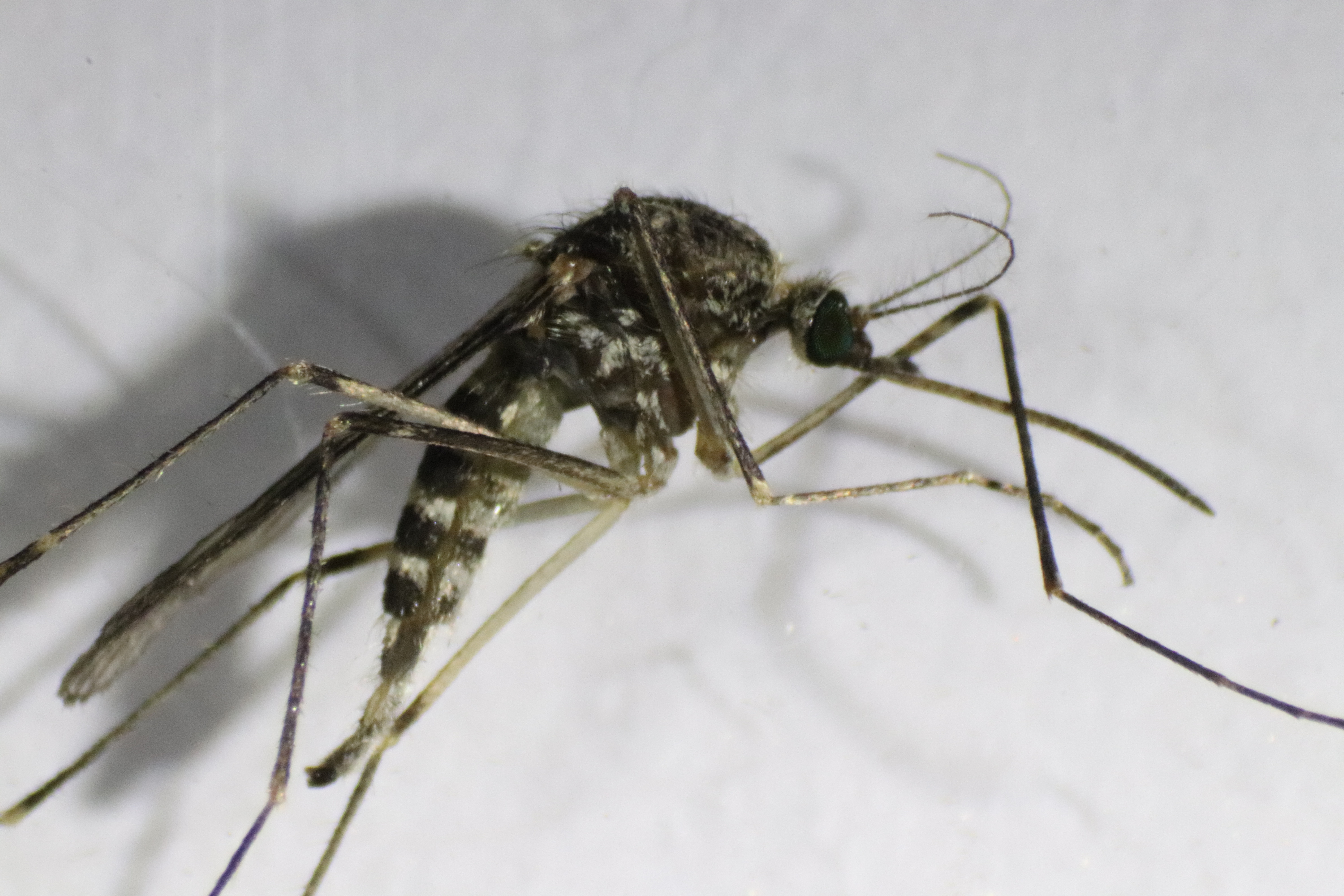
The specimen displays characteristic Aedes-like features including alternating black and pale leg banding, pale basal abdominal bands, and what appears to be pale longitudinal scutal striping with dark contrasting regions. The compound eye appears green-tinged under macro lighting. The proboscis is elongated with palps visibly shorter, consistent with a female culicine. Species-level identification is not possible from this image: the specimen appears somewhat desiccated or damaged, scale reference is absent, and key diagnostic features such as the lyre-shaped scutal marking (Ae. aegypti) or silver-white median longitudinal stripe (Ae. albopictus) are not clearly resolvable. Could potentially be Aedes vexans or a related floodwater Aedes given the mottled thoracic scaling pattern. A higher-resolution dorsal view of the scutum and wing venation would greatly improve confidence.
Model: claude-sonnet-4-6
• 93 Apr 2026
Specimen Biology
| Sex | male |
| Life Stage | adult |
| Condition | good |
Collection Data
| Site | Pitzer Campus |
Preservation & Curation
| Preservation | dry pinned |
Imaging
| Body Part Imaged | whole body |
Researcher Notes
The specimen displays characteristic Aedes-like features including alternating black and pale leg banding, pale basal abdominal bands, and what appears to be pale longitudinal scutal striping with dark contrasting regions. The compound eye appears green-tinged under macro lighting. The proboscis is elongated with palps visibly shorter, consistent with a female culicine. Species-level identification is not possible from this image: the specimen appears somewhat desiccated or damaged, scale reference is absent, and key diagnostic features such as the lyre-shaped scutal marking (Ae. aegypti) or silver-white median longitudinal stripe (Ae. albopictus) are not clearly resolvable. Could potentially be Aedes vexans or a related floodwater Aedes given the mottled thoracic scaling pattern. A higher-resolution dorsal view of the scutum and wing venation would greatly improve confidence.